
From Andalusian Roots to Coastal Kitchens: Mama’s Seafood Bastilla
Picture the wedding kitchen the day before the banquet. Mama and her sisters sit shoulder to shoulder around a low table, sleeves pushed up, a mountain of shrimp (prawns) in front of them. Someone peels. Someone slices calamari into rings. Someone snips a cloud of glass noodles with kitchen scissors, laughing over who got stuck with the sticky job. Then comes the smell, the one that tells the whole street that a celebration is coming: grated garlic, cilantro (coriander), and parsley crushed into chermoula (our herb and spice marinade), with paprika blooming in hot butter and a bright splash of lemon.
This is Moroccan Seafood Bastilla, and its very name holds a piece of history. When Andalusian refugees brought the dish to Morocco centuries ago, they called it pastilla meaning “small pastry” in Spanish. Because the Arabic alphabet lacks a “P” sound, Moroccan tongues naturally softened it to bastilla. While that medieval pigeon pastilla or the sweet and savory royal chicken version you see today remains a classic, this seafood variation has a different story.
It was born in the busy coastal cities of Casablanca and Tangier, where wedding caterers got tired of serving meat course after meat course and turned to the sea. They borrowed a little from the maritime trade routes, a splash of soy sauce and a spoonful of dried black mushrooms, and found a deep, savory depth that made guests reach for seconds. Today, the elegant way to serve it is the individual format, and this Mini Seafood Pastilla is exactly that.
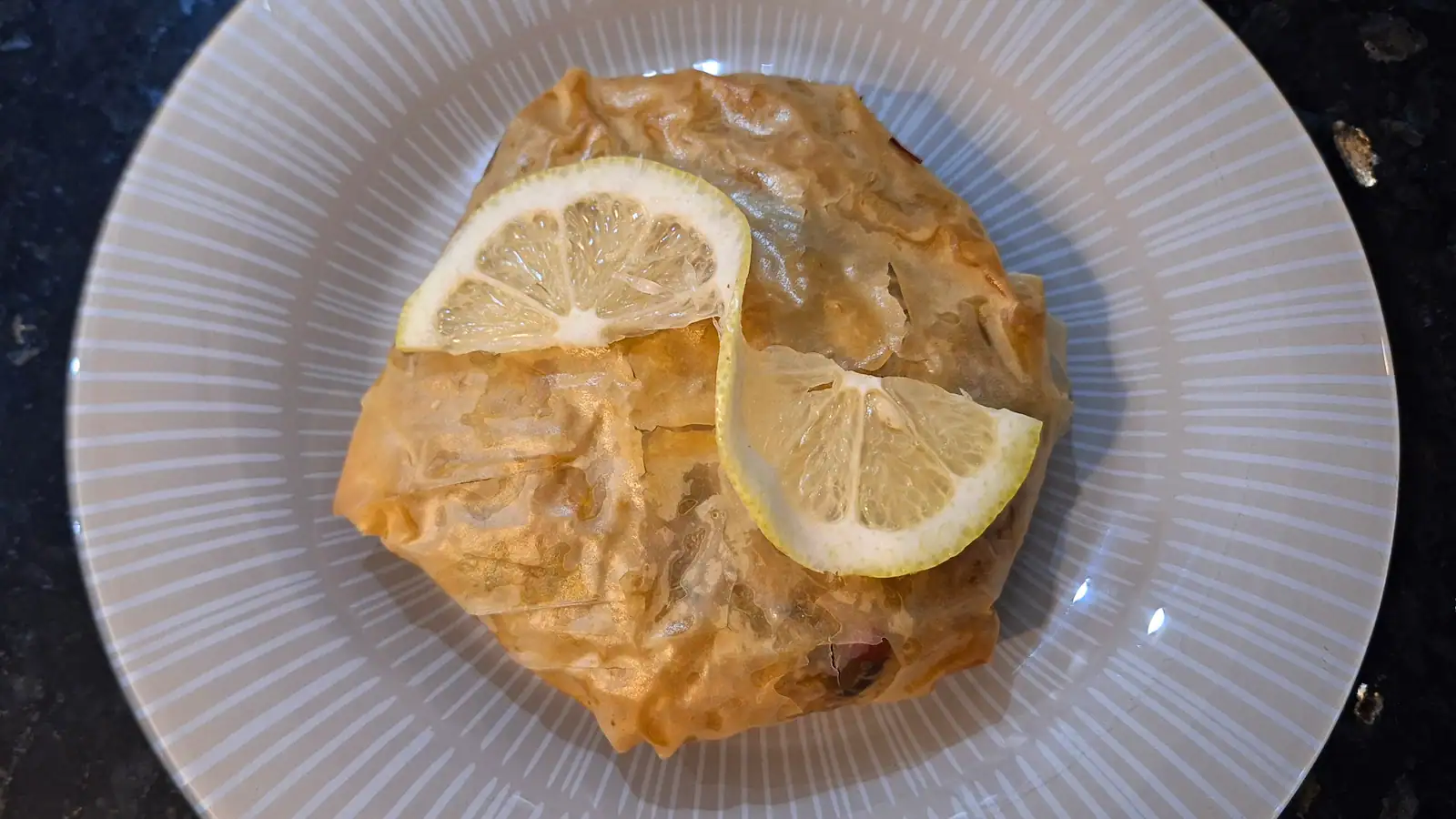
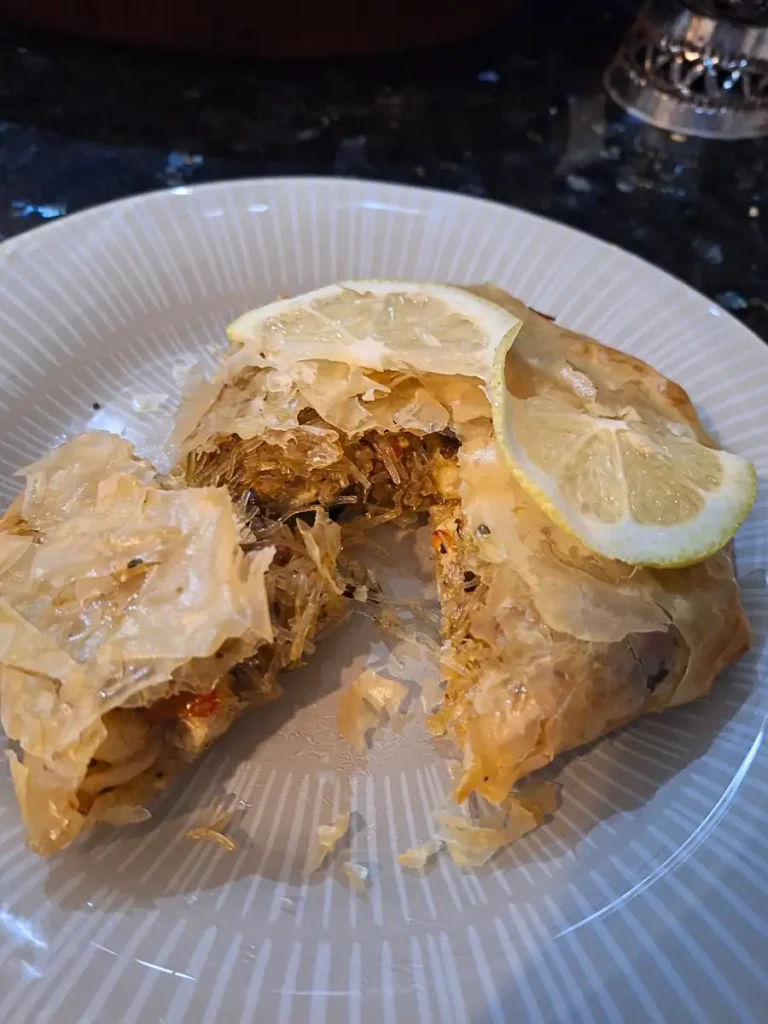
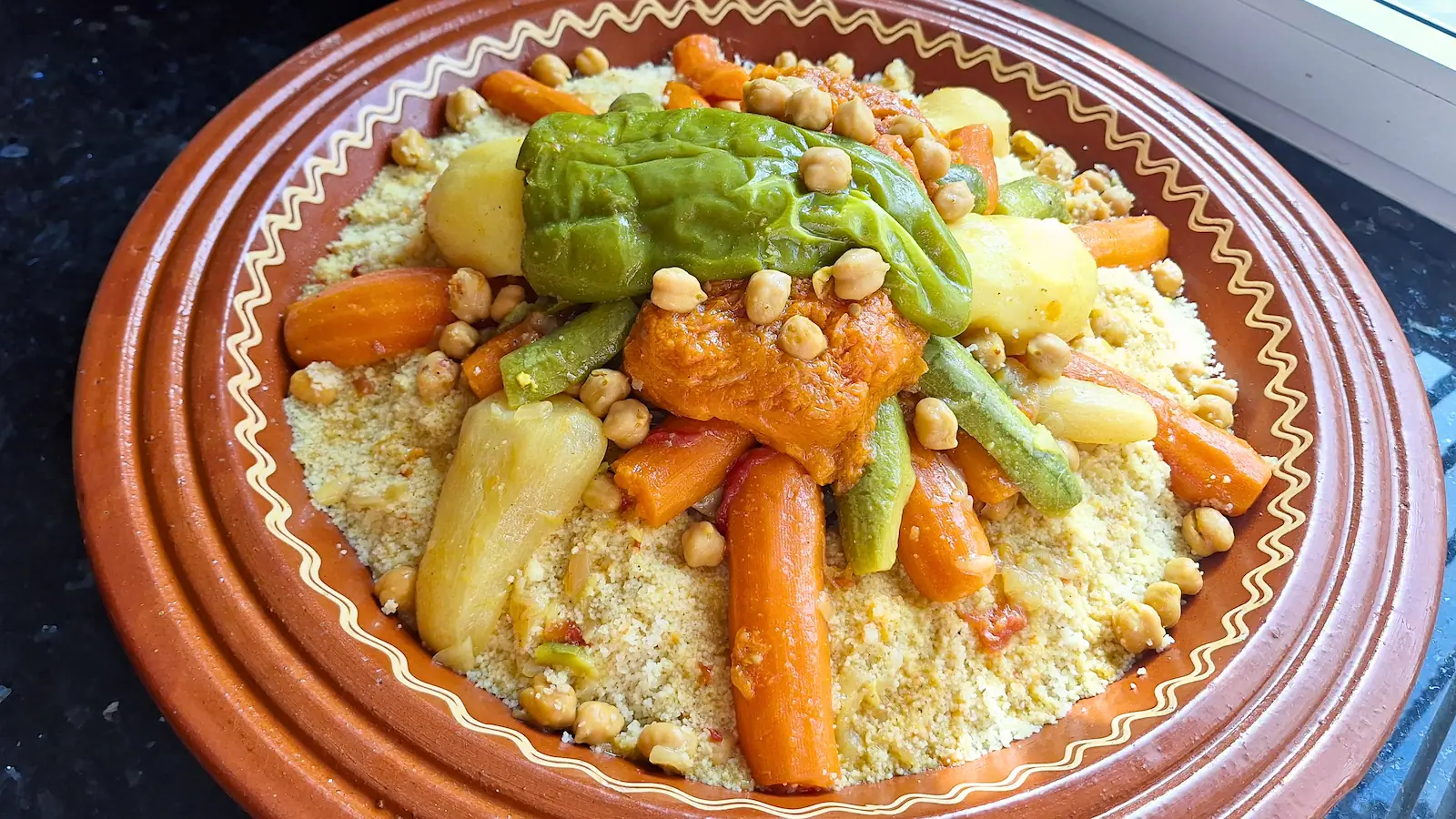
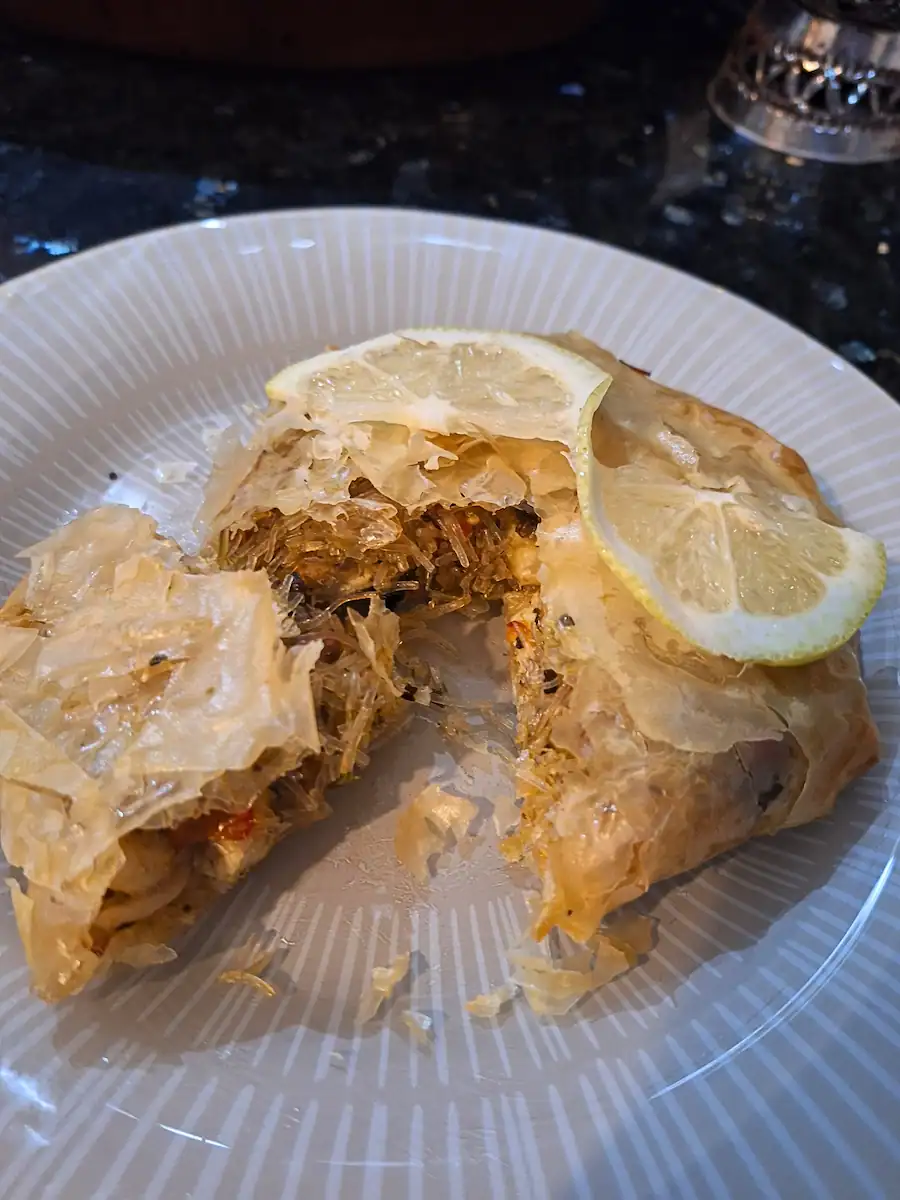
Each guest gets their own crackling golden parcel, and when the fork breaks through the buttery layers, steam carries the scent of the sea and warm spices up to your face. If you have ever searched for an Authentic Fish Pastilla that tastes like it came from a Moroccan family celebration and not a restaurant shortcut, you are in the right kitchen. Mama’s version layers three kinds of seafood: sweet shrimp, tender calamari, and flaky white fish (we like ferkh, which is conger eel, or thick whiting).
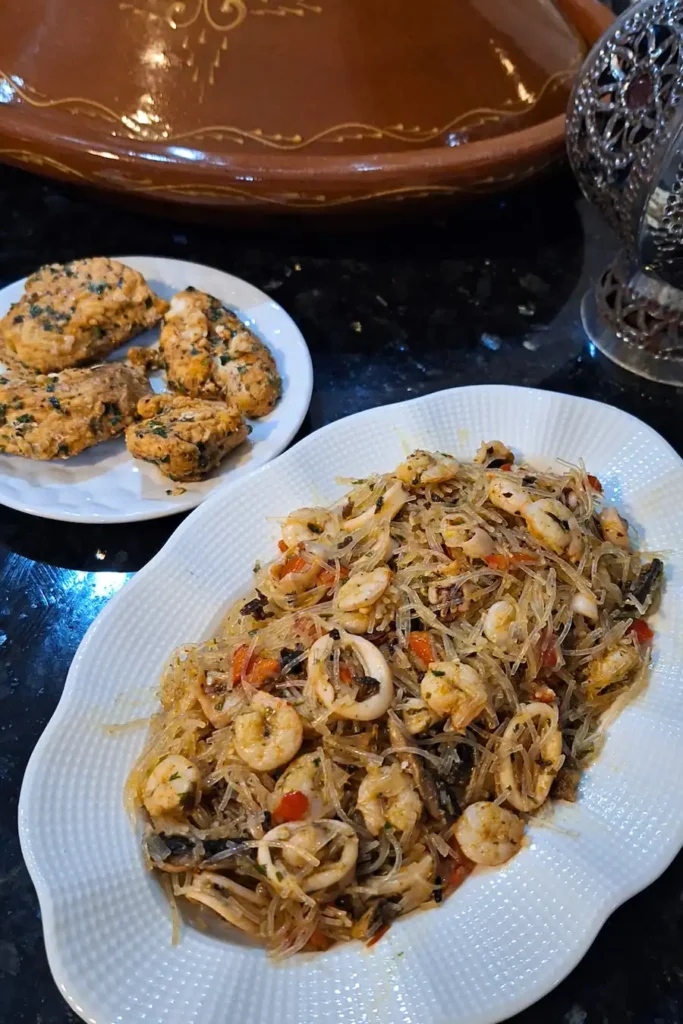
They are folded through slippery mung bean noodles and sautéed bell pepper (capsicum), then wrapped in pastry that crackles like autumn leaves. Here is why this recipe is so clever: almost everything happens in one large non-stick skillet (frying pan). You sear the shrimp, then the calamari, then the vegetables, and finally the noodles, all in the same pan, so every layer of flavor builds on the one before. The seafood juices that drain off are not thrown away, they go back into the pan to season the noodles.
You do not need to hunt down hard-to-find warka (paper-thin Moroccan pastry), because I will show you a reliable Warka Pastry Substitute using regular phyllo (filo). The bastillas bake at a gentle temperature, and you can make them ahead for a stress-free dinner party. Best of all, once you learn how to keep pastilla crispy, you will never serve a soggy one again.
Now tell me, have you ever tasted bastilla at a Moroccan wedding or family feast, and was it the sweet and savory chicken version, or the seafood one? Leave me a comment below. I would love to hear your memories, and bsaha (to your health) in advance!
Why You’ll Love Mama’s Moroccan Seafood Bastilla
Equipment You’ll Need for your Bastilla
Golden, crackling pastry layers, folded over a foolproof trio of tender seafood and rich, spiced vermicelli.
Ingredients (Yields 8 mini Bastillas)
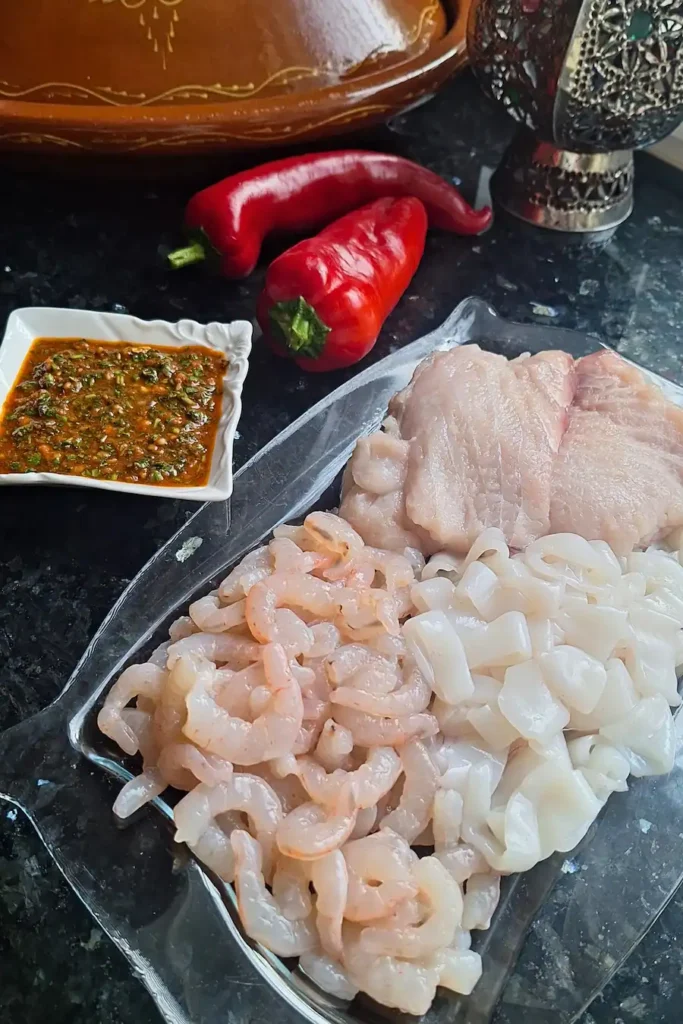
The Seafood Trio for Authentic Fish Pastilla
- 500 g (1 lb 2 oz) peeled shrimp (prawns): Sear them until just cooked with no moisture left, so they stay sweet and juicy inside the pastry.
- 500 g (1 lb 2 oz) calamari (squid), cut into circles: Halve any large rings so they fit neatly in a mini parcel. (Mama’s tip: cook them low and slow until tender, never rubbery.)
- 500 g (1 lb 2 oz) firm white fish (conger eel/ferkh, shark, or thick whiting), cut into medium chunks: A firm fish holds its shape and gives you the flaky topping that makes an Authentic Fish Pastilla special. Ask your fishmonger for the sturdiest cut.
The Filling Base: Vegetables and Noodles
- 250 g (9 oz) mung bean vermicelli (glass noodles): Mama’s firm warning: do NOT use rice noodles! They turn to mush. Soak in boiling water for exactly 10 minutes.
- 1 medium onion (about 150 g / 5 oz), finely chopped: Cook until lightly golden for sweetness.
- 1 large red bell pepper (capsicum) (about 200 g / 7 oz), or 2 small, finely chopped: Adds color and a gentle sweetness.
- 4 medium white mushrooms (about 100 g / 3.5 oz), chopped: They soak up the seafood juices beautifully.
- 1 full Tbsp dried black mushrooms (about 5 g / 0.2 oz), soaked in hot water for 10 minutes and chopped: A small amount gives a big, earthy depth.
Optional Finishing Touches
- Dutch Edam cheese: For grating on top of the filling. It melts into a lovely, mild creaminess.
- Twisted lemon slices: A pretty garnish for the plate.
- Cooked whole shrimp (prawns): Perch one on top of each bastilla for a showstopping finish.
The Chermoula Marinade (The Soul of the Dish)
- 4 Tbsp fresh parsley and cilantro (coriander), finely chopped (half and half): Parsley gives freshness and cilantro gives that signature Moroccan brightness.
- 4 cloves garlic, grated: Grating melts the garlic into the marinade so there are no harsh chunks.
- 1/2 tsp (1 g) black pepper.
- 1 tsp (2 g) ginger (ground): A warm, gentle backbone for the seafood.
- 2 tsp (5 g) paprika (preferably 1 tsp regular, 1 tsp smoked): The smoked half adds a deep, almost wood-fired note.
- 1/2 tsp (1 g) ground hot pepper (cayenne/chili powder): Optional, if you like a little heat.
- 1 Tbsp (15 ml) olive oil
- 1 tsp (6 g) salt: Plus extra to adjust to taste at the end. Always taste before you fill!
- Juice of 1/2 medium lemon (about 2 Tbsp / 30 ml): Its acidity brightens the seafood.
- 1 Tbsp (15 ml) light soy sauce: A little umami boost that Casablanca and Tangier caterers adopted through maritime trade.
The Pastry: Your Warka Pastry Substitute
- 500 g (1 lb 2 oz) package of commercial phyllo (filo) dough: Keep it covered in its package until you use it. Dry phyllo cracks fast. Remember the 2:1 rule: two sheets pressed together stand in for one traditional warka sheet.
- 150 g (5.3 oz) butter, carefully melted (for brushing the phyllo): Be generous. This is how to keep pastilla crispy and golden.
For Sautéing
- 20 g (4 tsp) butter: Used for sautéing the seafood and vegetables—divided. It adds richness and helps the shrimp and calamari brown.
Mama’s Tips & Notes
follow this little yet important tips for better results
Pastry Tips: How to Keep Pastilla Crispy
- The Soggy Bottom Fix: Cool the filling completely to room temperature, spread out on a wide metal tray. This is the number one answer to how to keep pastilla crispy, Steam is the enemy of phyllo, and any trapped heat will turn your pastry soggy from the inside out.
- The Phyllo Architecture: Use two sheets of phyllo pressed together and brush them generously with melted butter. This builds the sturdy, 4-layer base your Moroccan Seafood Bastilla needs to stay shatteringly crisp.
- The Flip Finish: Always turn each bastilla upside down onto the parchment-lined baking sheet so the messy folds are tucked underneath. Watch the video to see the dual-phyllo flip technique for a bakery-level finish!
Warka Pastry Substitute Tips
- The 2:1 Rule: Traditional Moroccan warka is hard to find, so commercial phyllo is a wonderful Warka Pastry Substitute. It is thinner and drier, so for every sheet of warka, use two sheets of phyllo. Butter them heavily to replicate warka’s strength.
Seafood and Filling Tips
- The Umami Gold: Never throw away the liquid drained from the shrimp and calamari. It is rich in marine proteins and is essential for flavoring the vermicelli. This is where the depth of an Authentic Fish Pastilla comes from.
- The Vermicelli Rule: Use mung bean vermicelli (glass noodles) only. Rice vermicelli will turn into a mushy paste during the double-cooking process.
- The Gentle Fish Touch: Cook the marinated white fish just until cooked through. Overcooking makes it hard, and you will be baking it again inside the pastry.
Serving Tips
- The Elegant Host Move: This Mini Moroccan Seafood Bastilla (Pastilla) format is the modern standard for elegant hosting, because everyone gets their own golden, crackly parcel. Serve it as an appetizer or a main course.


Frequently Asked Questions about Seafood Bastilla
More Tasty Ideas from Mama’s Cozy Recipes
If this dish made you smile, you’ll love these other delicious picks too.

Easy Moroccan Harcha
Authentic Moroccan Couscous
Save Mama’s recipe for later!
Don’t lose this authentic, shatteringly crisp Moroccan Seafood Bastilla. Pin it to your favorite Moroccan food board so you can easily find it when you want to serve an elegant, show-stopping appetizer at your next dinner party!
Save to Pinterest
The Recipe Card: Moroccan Seafood Bastilla
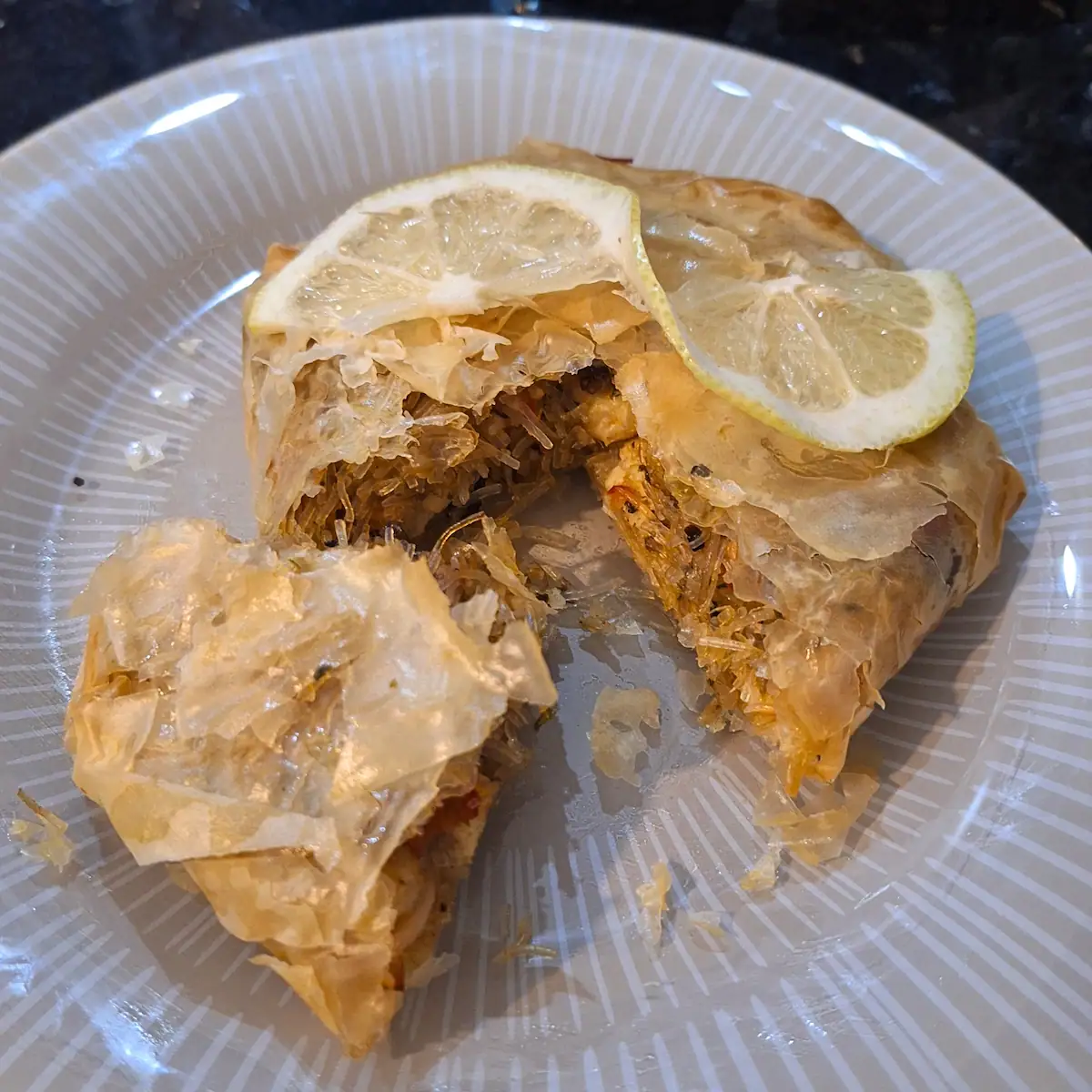
Moroccan Seafood Bastilla
Ingredients
Equipment
Method
- Make the Chermoula & Cook the Fish: Mix the parsley, cilantro (coriander), garlic, spices, olive oil, salt, lemon juice and soy sauce into a chermoula, then coat the white fish with 2 Tbsp of it. Cook the fish in an air fryer or oven just until cooked through, never until hard, and set aside. *(Check Mama's Tips and Notes above for the full flavor secrets behind our Authentic Fish Pastilla!)
- Sear the Shrimp & Calamari: In a large non-stick pan over medium-high heat, sear the shrimp (prawns) with 1 tsp butter and 1 Tbsp chermoula for about 5 minutes, then drain in a colander over a bowl. Repeat with the calamari (squid), 1 tsp butter and 1 Tbsp chermoula for 10-15 minutes until tender, and never throw away those savory juices!
- Build the Vegetable Base: In the same pan over medium heat, melt the remaining 2 tsp butter and cook the onion and red bell pepper (capsicum) until reduced and lightly golden. Add both mushrooms, half the remaining chermoula and the collected seafood juices, and cook until the mushrooms are tender and the liquid reduces.
- Prepare the Vermicelli: Soak the mung bean vermicelli in boiling water for exactly 10 minutes, drain well and snip into small pieces with kitchen scissors. Add it to the pan with the last of the chermoula and stir vigorously so it doesn't stick. *(Remember, only glass noodles will do. See Mama's Vermicelli Rule in the tips above!)
- Finish & Cool the Filling: Cook for about 2 minutes until the noodles absorb all the sauce and make a slight roasting sound, then turn off the heat and fold in the shrimp (prawns) and calamari (squid). Adjust the salt, spread the filling on a wide metal tray and cool for 30 minutes to room temperature.
- Create the Phyllo Base: Melt the 100g butter, then stack two phyllo (filo) sheets and brush the top generously. Fold in half to form a sturdy 4-layer square, our reliable Warka Pastry Substitute, and brush the top lightly again.
- Fill & Shape Each Bastilla: Mound a generous amount of cooled filling in the center, top with flaked white fish and a sprinkle of Edam if using, then fold the edges up and over to enclose it completely. Lightly brush the pastry with butter as you fold if it feels dry. Flip it seam-side down onto a parchment-lined baking sheet (baking tray) and repeat to make each Mini Pastilla. *(Watch the video bellow to master the dual-phyllo flip technique!)
- Bake to Golden Perfection: Preheat the oven to 170°C (340°F), brush the tops with any remaining melted butter, then lower to 150°C (300°F) and bake 30-45 minutes. Check at 20 minutes: if the bottoms are deeply golden but the tops are pale, switch off the bottom heat and use only the top element (grill) until your Moroccan Seafood Bastilla is shatteringly crisp.
Video
Notes
- The Soggy Bottom Fix: Cool the filling completely to room temperature on a wide metal tray, because steam is the enemy of phyllo.
- The Phyllo Architecture: Traditional warka is hard to find, so use two sheets of commercial phyllo (filo) pressed together for every single warka sheet and butter them heavily.
- The Vermicelli Rule: Use only mung bean vermicelli (glass noodles), as regular rice vermicelli turns into a mushy paste during the double-cooking process. Our main post explains exactly why!
- The Umami Gold: Never throw away the liquid drained from cooking the shrimp and calamari. It is rich in marine proteins and is essential for flavoring the vermicelli.
- Asian Influences: Arriving via global maritime trade, these were quickly adopted by Moroccan coastal wedding caterers to boost the umami profile of seafood pastillas. Read more about this fascinating maritime history in the substitutions section above!
- Make-Ahead Magic: Can you freeze pastilla? Yes! Freeze assembled raw bastillas tightly wrapped for up to 3 months and bake from frozen, adding 15-20 minutes. For exact reheating steps, scroll up to our FAQ section!
Leave a Comment