Traditional Moroccan Breakfast & Ramadan Baking

Authentic Baghrir Recipe (Moroccan Thousand Hole Pancakes)

🍽️ Makes 15 Baghrir • 💰 About $2 • 🌙 Ramadan Favorite

🍽️ Makes 15 Baghrir • 💰 About $2 • 🌙 Ramadan Favorite

The Forbidden Pan and the Secret of a Thousand Holes: Mama’s Baghrir

In Mama’s kitchen, there is one skillet (frying pan) that nobody touches. It lives on its own hook, wiped with a soft cloth and never scrubbed. Years ago, my cousin cracked an egg into it for a quick breakfast, and the lecture she got is still repeated at family gatherings. That pan is for baghrir and only baghrir. One whiff of fried egg or onion and the delicate surface is ruined for good.

On baghrir mornings, Mama sets that pan on the stovetop (hob) like a queen taking her throne. Then she waits. The batter rests under a warm kitchen towel (tea towel), and she lifts the corner now and then to check on it, the way you’d peek at a sleeping child. When the surface is domed and freckled with bubbles, she whispers bismillah and pours.

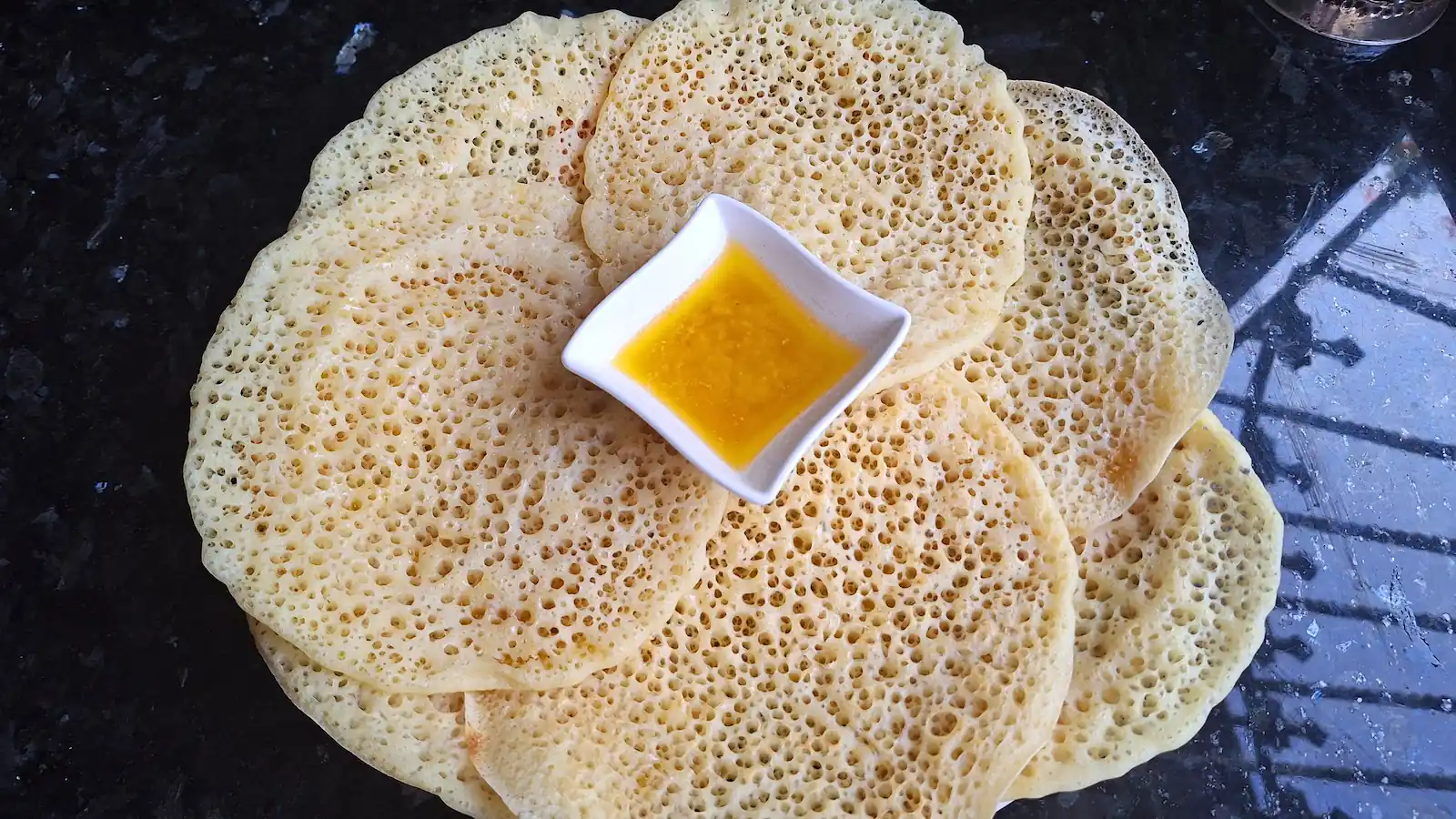
What follows is the part I could watch all day. The pale batter touches the hot pan, and within seconds tiny pinpricks appear, then bloom into craters. They multiply across the surface until it looks like a honeycomb. Moroccan mothers are quietly competitive about this. The more holes, the greater the cook, and no one admits to counting, though everyone does.

The smell comes next: warm smida (semolina) turning toasty, with a faint yeasty sweetness from the khmira (yeast). Each baghrira (a single pancake) comes off the pan with a bottom that is soft and matte, and a top that is spongy and perforated. Then comes the royal finish, a pour of melted butter whisked with glossy asel (honey) that sinks into every crater. Served with a glass of steaming atay (mint tea), it is breakfast at its most comforting.

This baghrir recipe (moroccan thousand hole pancakes) is the one Mama taught me, adapted for the modern kitchen. During Ramadan, her baghrir were cooked ahead and laid out across the counter. Just before the call to prayer, she would quickly reheat them for the bustling ftour (Iftar) table, so they arrived warm, fragrant, and ready to soak up butter and honey. Thanks to this baghrir recipe blender shortcut, you skip the endless whisking and get a silky batter in about three minutes. There’s no kneading, no flipping, and no eggs. These semolina pancakes no eggs need only pantry staples, cost about $2 for 15 pancakes, and need just a pan, a blender, and a little patience.

If you’ve been wondering how to make baghrir without the frustration, you’re in the right place. I’ll walk you through every step, including baghrir troubleshooting for the moments when the holes don’t appear. By the end, you’ll be making authentic moroccan thousand hole pancakes that would make any Moroccan grandmother nod in approval.

So tell me: do you have a special pan that no one dares cook in it? Leave me a comment below. I read every one, usually with a cup of mint tea in hand.

Why You’ll Love Mama’s Moroccan Thousand Hole Pancakes

The Silky Blender Shortcut: Unlike traditional methods that have you whisking by hand until your arm aches, a high-speed blender whips up a perfectly smooth batter in 2 to 3 minutes. You’ll watch a deep “tornado” form in the center, which tells you the semolina has fully dissolved and no lumps remain.
Hole-Making Insurance: The secret is a batter that resembles liquid yogurt, plus lukewarm (never hot) water that keeps the yeast alive. I’ve included the little rules Mama swears by. Keep salt and yeast on opposite sides of the bowl, add the baking powder only in the last few seconds of blending, and pour off the heat. They are your best baghrir troubleshooting tools, and they’re why the holes show up every time.
Naturally Egg-Free, Naturally Simple: These are true semolina pancakes no eggs are needed for. The batter is made from extra-fine durum wheat semolina, all-purpose flour (plain flour), yeast, salt, and warm water. The base is naturally vegan, and it becomes fully vegan if you serve it with amlou (argan almond dip) instead of butter and honey.
Ramadan-Ready and Make-Ahead Friendly: These pancakes love a head start. Cool them in a single layer on a clean towel, never stacked while warm, or they turn into a gelatinous mass. Once cooled, they stack without sticking, keep in the fridge for up to 3 days or the freezer for up to 3 months, and reheat in minutes in a pan or air fryer for a stress-free Iftar table.

Equipment You’ll Need for your Baghrir

1 High-speed blender: This is the secret to a silky, lump-free batter, and it’s why every baghrir recipe blender method beats whisking by hand. Blend until a deep “tornado” forms in the center. Smooth batter is the first step in how to make Baghrir with the most holes.
1 High-Quality Non-Stick Skillet: In a Moroccan home, this pan is sacred, frying an egg on it is the fastest way to get in trouble with Mama! You don’t need a brand-new pan, but it must have a flawless surface. Because the batter cooks on one side only, a worn-out skillet will cause sticking and tearing. A perfect non-stick surface is the secret to how to make baghrir easily, and the heart of authentic moroccan thousand hole pancakes.
1 Clean kitchen towel (tea towel) for cooling: Spread the Baghrir side by side on it in a single layer. Never stack them while warm, or they turn into a gummy mass. This simple step is the most important part of Baghrir troubleshooting.
Golden, crackling pastry layers, folded over a foolproof trio of tender seafood and rich, spiced vermicelli.
Key Ingredients for the Perfect Batter

The secret to a successful baghrir recipe (moroccan thousand hole pancakes) isn’t just following the steps, it’s understanding the batter. Baghrir is a delicate balance of structure and aeration, and getting it right is your absolute best tool for baghrir troubleshooting.

Extra-Fine Semolina vs. All-Purpose Flour

At the heart of authentic moroccan thousand hole pancakes is the precise ratio of extra-fine durum wheat semolina to all-purpose flour.

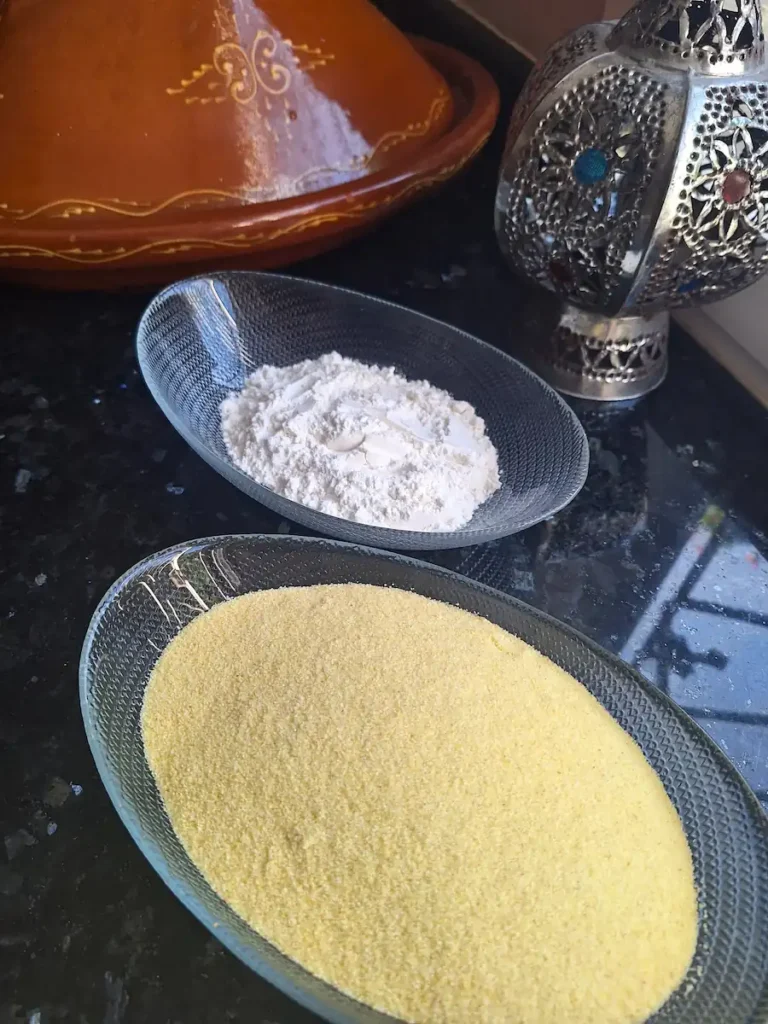
The Semolina (The Sponge): You must use extra-fine semolina (not medium or coarse couscous grains). Semolina provides the spongy, slightly elastic crumb that absorbs the honey-butter syrup without turning soggy. If the grains are too large, they won’t hydrate quickly enough, resulting in a heavy, dense pancake.
The Flour (The Binder): Semolina alone doesn’t have enough structural cohesion. Adding a small amount of all-purpose flour provides just enough gluten to bind the batter together. This prevents the pancakes from tearing when you handle them and keeps the texture light.

Because the batter relies on this grain combination rather than eggs for structure, these are naturally perfect semolina pancakes no eggs required!

The Double-Leavening Magic

The iconic craters of a baghrir are the result of a precise “double-leavening” reaction, accelerated by the baghrir recipe blender method.

The Slow Riser (Yeast): Active dry yeast does the heavy lifting during the 30-minute resting phase. As it consumes sugars in a warm environment (fueled by strictly lukewarm water), it releases carbon dioxide. This creates a slow, steady network of air bubbles throughout the batter and develops that classic, slightly fermented flavor.
The Explosive Finish (Baking Powder): While the yeast works slowly, the baking powder is your thermal trigger. This is exactly how to make baghrir with maximum holes: add the baking powder in the final seconds of blending so it doesn’t lose its potency. When this charged batter hits the medium heat of your pan, the baking powder reacts instantly, forcing the pre-existing yeast bubbles to expand rapidly and burst through the surface.

This combination of mechanical aeration (the blender “tornado”) and the double-leavening chemical reaction is the only way to guarantee those beautiful thousand holes every single time.

Key Ingredients for the Perfect Batter

The secret to a successful baghrir recipe isn’t just following the steps, it’s understanding the batter. Baghrir is a delicate balance of structure and aeration, and getting it right is your absolute best tool for baghrir troubleshooting.

Extra-Fine Semolina vs. All-Purpose Flour:

At the heart of authentic moroccan thousand hole pancakes is the precise ratio of extra-fine durum wheat semolina to all-purpose flour.

The Semolina (The Sponge): You must use extra-fine semolina (not medium or coarse couscous grains). Semolina provides the spongy, slightly elastic crumb that absorbs the honey-butter syrup without turning soggy. If the grains are too large, they won’t hydrate quickly enough, resulting in a heavy, dense pancake.

The Flour (The Binder): Semolina alone doesn’t have enough structural cohesion. Adding a small amount of all-purpose flour provides just enough gluten to bind the batter together. This prevents the pancakes from tearing when you handle them and keeps the texture light.

Because the batter relies on this grain combination rather than eggs for structure, these are naturally perfect semolina pancakes no eggs required!

The Double-Leavening Magic

The iconic craters of a baghrir are the result of a precise “double-leavening” reaction, accelerated by the baghrir recipe blender method.

The Slow Riser (Yeast): Active dry yeast does the heavy lifting during the 30-minute resting phase. As it consumes sugars in a warm environment (fueled by strictly lukewarm water), it releases carbon dioxide. This creates a slow, steady network of air bubbles throughout the batter and develops that classic, slightly fermented flavor.

The Explosive Finish (Baking Powder): While the yeast works slowly, the baking powder is your thermal trigger. This is exactly how to make baghrir with maximum holes: add the baking powder in the final seconds of blending so it doesn’t lose its potency. When this charged batter hits the medium heat of your pan, the baking powder reacts instantly, forcing the pre-existing yeast bubbles to expand rapidly and burst through the surface.

This combination of mechanical aeration (the blender “tornado”) and the double-leavening chemical reaction is the only way to guarantee those beautiful thousand holes every single time.

Ingredients (Yields 15 baghrir)

The Dry Base:

The Royal Topping

The Leaveners and Warm Water:

How to Make Baghrir: Step-by-Step

A Detailed Guide to A Perfect thousand hole pancakes

Step 1: Whisk the Base

Grab a big bowl and add the extra-fine durum wheat semolina, all-purpose flour (plain flour), and yeast. Add salt on the opposite side of the bowl from the yeast. Salt sitting directly on yeast can literally slow it down, so keep them apart for now, then pour in the warm water gradually while whisking, which safely prevents lumps. Your water should feel comfortably lukewarm on your wrist, never hot. Hot water kills the yeast, and that is the number one reason a baghrir recipe (moroccan thousand hole pancakes) falls flat.

This is the first step in how to make baghrir the way Moroccan mothers do. It’s also a naturally simple batch of semolina pancakes no eggs, so there’s nothing to crack and nothing to fuss over!

Step 2: The “Tornado” Blend

Gently transfer your batter into the blender cup. This baghrir recipe blender shortcut is my favorite trick, because it makes the batter silky smooth in minutes with no sieving. Blend on high for 2 to 3 minutes (includes giving a breaks to your blender from time to time), until you see a deep “tornado” form in the center and the batter looks perfectly smooth.

Now for the important part: add the baking powder in the last few seconds and blend one final time. This activates it without destroying its power. Your batter should look like liquid yogurt. That consistency is the secret to getting holes.

Step 3: The Resting Phase

Pour the batter back into your bowl and cover it tightly with plastic wrap (cling film). Then drape a warm kitchen towel (tea towel) over the top. Let it rest for 20 to 30 minutes, depending on how warm your kitchen is. You’re looking for a domed, bubbly surface. Those bubbles are the future holes, so don’t rush this part.

Extra-fine durum wheat semolina and all-purpose flour in glass bowls, set against a traditional Moroccan tagine and silver lantern for a blender baghrir recipe.
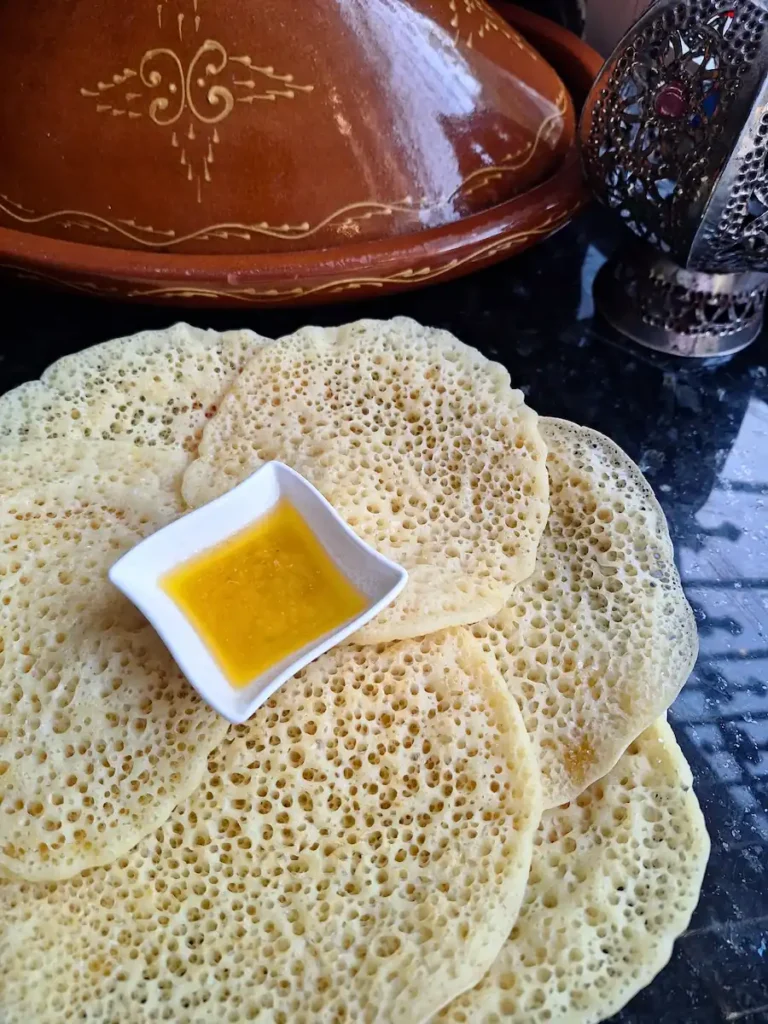
A vertical view of freshly cooked Moroccan thousand hole pancakes arranged next to a traditional tagine, demonstrating the perfect texture for baghrir troubleshooting.

(Watch the video to check out the active bubbles on the surface after the 30-minute rest, so you know exactly what “ready” looks like.)

Step 4: The Off-Heat Pour and Swirl

Preheat your high-quality non-stick skillet (frying pan) over medium heat for 2 minutes. Now take it off the heat, pour a half-ladle of batter into the center, and give the pan one single, confident circular swirl to spread it evenly. Then return it to the heat. Don’t be tempted to swirl twice, because you’ll disturb those precious bubbles.

A little Moroccan kitchen wisdom: your baghrir pan is sacred. In many Moroccan homes, the dedicated pan is strictly off-limits for anything else, and frying an egg on it is a surefire way to get yourself in trouble! A well-kept non-stick surface is what lets the pancakes release gently and cook evenly. (Watch the video to see the off-heat pouring technique in action.)

Step 5: Cooking the Thousand Holes (No Flipping!)

Cook over medium heat for about 2 minutes, on one side only. Never flip a baghrir!

Watch closely as the holes appear and spread across the surface. Your baghrira is done when the top turns completely matte, the wet yellowish sheen fades, and the iconic craters fully form. If your pancakes aren’t showing off, use this quick baghrir troubleshooting: if there are no holes, your batter is likely too thick, so whisk in a splash of warm water. If they are sticking or browning, lower the heat, and if they are flat and dense, your water was too hot. (Watch the video to see the thousand holes form in real time!)

Step 6: Serve your Baghrir the Royal Way

Transfer each cooked baghrir to a wide tray or clean kitchen towel in a single layer. Never stack them while warm, or they’ll turn into a watery, gelatinous mass. Once they’ve cooled completely, repeat with the remaining batter until you have about 15 pancakes. When you’re ready to serve, reheat them slightly in a pan or air fryer, once cooled, they won’t stick together, allowing you to stack them safely for your bustling Ramadan Iftar table. Finally, gently warm 1 Tbsp butter with 2 Tbsp honey into a glossy, golden emulsion, and pour it generously over the stack. This royal topping makes these authentic Moroccan thousand hole pancakes completely irresistible!

How to Make Moroccan Baghrir

A Detailed Guide to A Perfect thousand hole pancakes

Step 1: Whisk the Base

Grab a big bowl and add the extra-fine durum wheat semolina, all-purpose flour (plain flour), and yeast. Add salt on the opposite side of the bowl from the yeast. Salt sitting directly on yeast can literally slow it down, so keep them apart for now, then pour in the warm water gradually while whisking, which safely prevents lumps. Your water should feel comfortably lukewarm on your wrist, never hot. Hot water kills the yeast, and that is the number one reason a baghrir recipe (moroccan thousand hole pancakes) falls flat.

This is the first step in how to make baghrir the way Moroccan mothers do. It’s also a naturally simple batch of semolina pancakes no eggs, so there’s nothing to crack and nothing to fuss over!

Step 2: The “Tornado” Blend

Gently transfer your batter into the blender cup. This baghrir recipe blender shortcut is my favorite trick, because it makes the batter silky smooth in minutes with no sieving. Blend on high for 2 to 3 minutes (includes giving a breaks to your blender from time to time), until you see a deep “tornado” form in the center and the batter looks perfectly smooth.

Now for the important part: add the baking powder in the last few seconds and blend one final time. This activates it without destroying its power. Your batter should look like liquid yogurt. That consistency is the secret to getting holes.

Extra-fine durum wheat semolina and all-purpose flour in glass bowls, set against a traditional Moroccan tagine and silver lantern for a blender baghrir recipe.
Step 3: The Resting Phase

Pour the batter back into your bowl and cover it tightly with plastic wrap (cling film). Then drape a warm kitchen towel (tea towel) over the top. Let it rest for 20 to 30 minutes, depending on how warm your kitchen is. You’re looking for a domed, bubbly surface. Those bubbles are the future holes, so don’t rush this part. (Watch the video to check out the active bubbles on the surface after the 30-minute rest, so you know exactly what “ready” looks like.)

Step 4: The Off-Heat Pour and Swirl

Preheat your high-quality non-stick skillet (frying pan) over medium heat for 2 minutes. Now take it off the heat, pour a half-ladle of batter into the center, and give the pan one single, confident circular swirl to spread it evenly. Then return it to the heat. Don’t be tempted to swirl twice, because you’ll disturb those precious bubbles.

A little Moroccan kitchen wisdom: your baghrir pan is sacred. In many Moroccan homes, the dedicated pan is strictly off-limits for anything else, and frying an egg on it is a surefire way to get yourself in trouble! A well-kept non-stick surface is what lets the pancakes release gently and cook evenly. (Watch the video to see the off-heat pouring technique in action.)

A vertical view of freshly cooked Moroccan thousand hole pancakes arranged next to a traditional tagine, demonstrating the perfect texture for baghrir troubleshooting.
Step 5: Cooking the Thousand Holes (No Flipping!)

Cook over medium heat for about 2 minutes, on one side only. Never flip a baghrir! Watch closely as the holes appear and spread across the surface. Your baghrira is done when the top turns completely matte, the wet yellowish sheen fades, and the iconic craters fully form.

If your pancakes aren’t showing off, use this quick baghrir troubleshooting: if there are no holes, your batter is likely too thick, so whisk in a splash of warm water. If they are sticking or browning, lower the heat, and if they are flat and dense, your water was too hot. (Watch the video to see the thousand holes form in real time!)

Step 6: Serve your Baghrir the Royal Way

Transfer each cooked baghrir to a wide tray or clean kitchen towel in a single layer. Never stack them while warm, or they’ll turn into a watery, gelatinous mass. Once they’ve cooled completely, repeat with the remaining batter until you have about 15 pancakes. When you’re ready to serve, reheat them slightly in a pan or air fryer, once cooled, they won’t stick together, allowing you to stack them safely for your bustling Ramadan Iftar table.

Finally, gently warm 1 Tbsp butter with 2 Tbsp honey into a glossy, golden emulsion, and pour it generously over the stack. This royal topping makes these authentic Moroccan thousand hole pancakes completely irresistible!

Mama’s Tips & Notes

follow this little yet important tips for better results

Batter Tips: The Baghrir Recipe Blender Method

  • The Yeast and Salt Divorce: When you whisk the dry ingredients, keep the salt and yeast on opposite sides of the bowl. Direct contact with salt can weaken the yeast, so let them meet only once the water goes in.
  • The Liquid Yogurt Test: Your batter should be smooth and pourable, like liquid yogurt. If it’s too thick, the bubbles can’t break through the surface and your holes won’t form.
  • The Lukewarm Promise: Use strictly warm water, never hot. Hot water kills the yeast and ruins the texture, so test it on your wrist like you would for a baby’s bottle.

How to Cook Baghrir Perfectly (Troubleshooting)

  • The Forbidden Pan Law: In a Moroccan home, the baghrir pan is sacred. Every mama keeps one dedicated pan just for these pancakes, and whoever fries an egg on it will hear about it for years! Scratches and residue are the enemy of a clean, even surface.
  • The Off-Heat Pour: Preheat the pan for 2 minutes, then take it off the heat to pour in half a ladle of batter and give one single circular swirl. Spreading the batter off the heat lets it settle evenly before the bottom starts to cook.
  • The No-Flip Wisdom: Cook on one side only, for about 2 minutes. The baghrir is ready when the surface turns completely matte, the wet yellowish sheen is gone, and the craters have fully formed. If you flip it, you lose those beautiful holes.
  • The Hole-Counting Pride: Moroccan mothers take the holes very seriously, and a pan of perfectly pitted baghrir is a sign of real skill. If your holes are shy at first, check your batter consistency and your water temperature before blaming yourself.

How to Cool and Store Baghrir Tips

  • The Single-Layer Rule: Never stack fresh baghrir straight from the pan. They turn into a watery, gelatinous mass. Lay them side by side on a wide tray or clean kitchen towel and let them cool completely.
  • The Stack-After-Cooling Secret: Once the baghrir have cooled, you can stack them without sticking. This is how Moroccan mothers get ahead for a busy Ramadan Iftar table: they cook early, then gently reheat at the last minute.

Serving Tips

  • The Perfect Pairing: Serve your baghrir with a steaming pot of Mint Tea. For a vegan-friendly option, offer a bowl of Amlou for dipping.
More Moroccan Breakfast & Tea Time Staples (Ramadan Stars)

If you loved this spongy baghrir, your weekend breakfast or afternoon tea table isn’t complete without these other classic Moroccan pan-breads. Grab your mint tea and try these next!

More Moroccan Breakfast & Tea Time Staples

Loved this spongy Baghrir? Try these classic Moroccan pan-breads next!

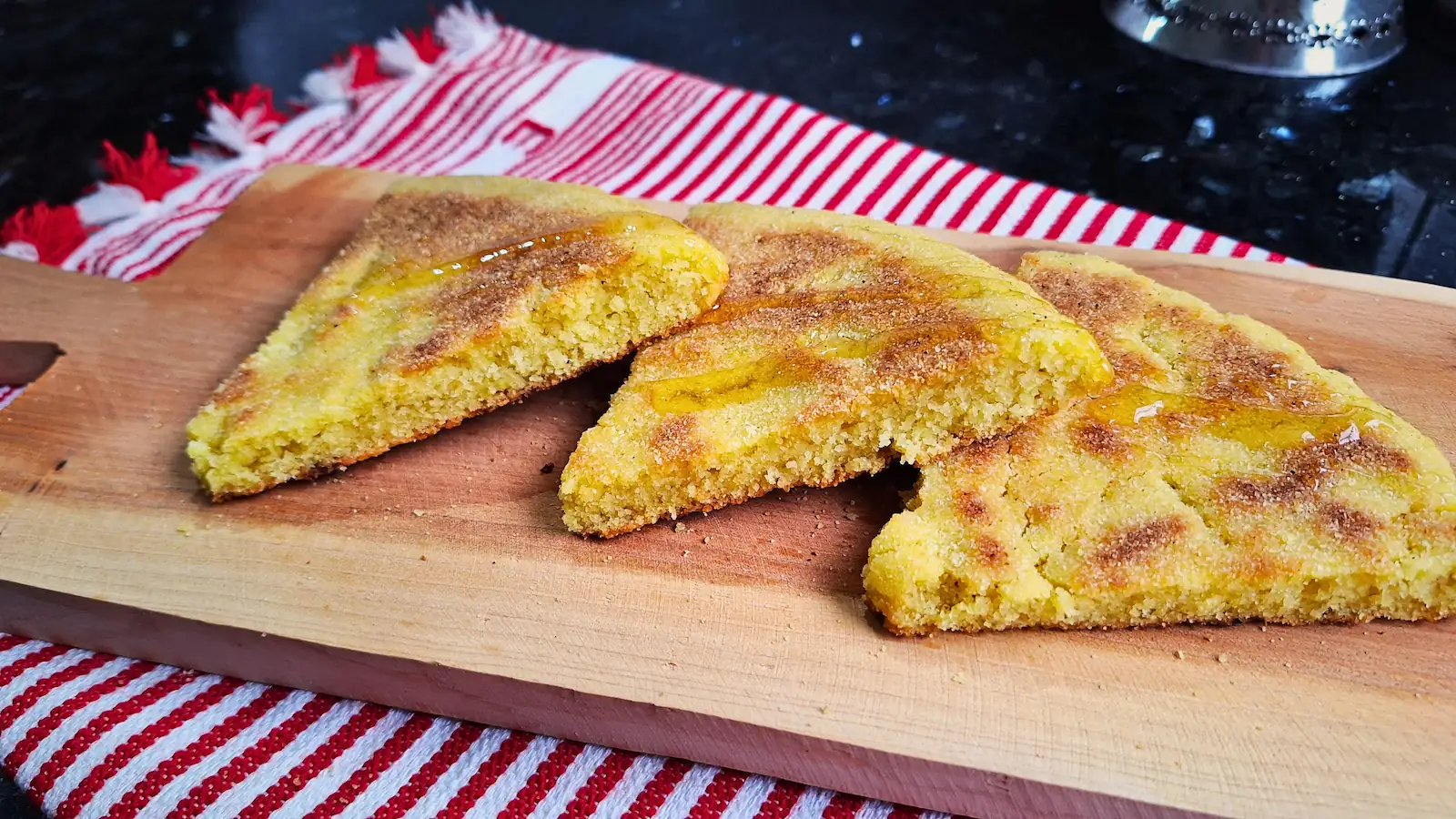
Easy Moroccan Harcha Recipe (No Milk) with Honey
15-MIN STOVETOP RECIPE

Authentic Moroccan Harcha

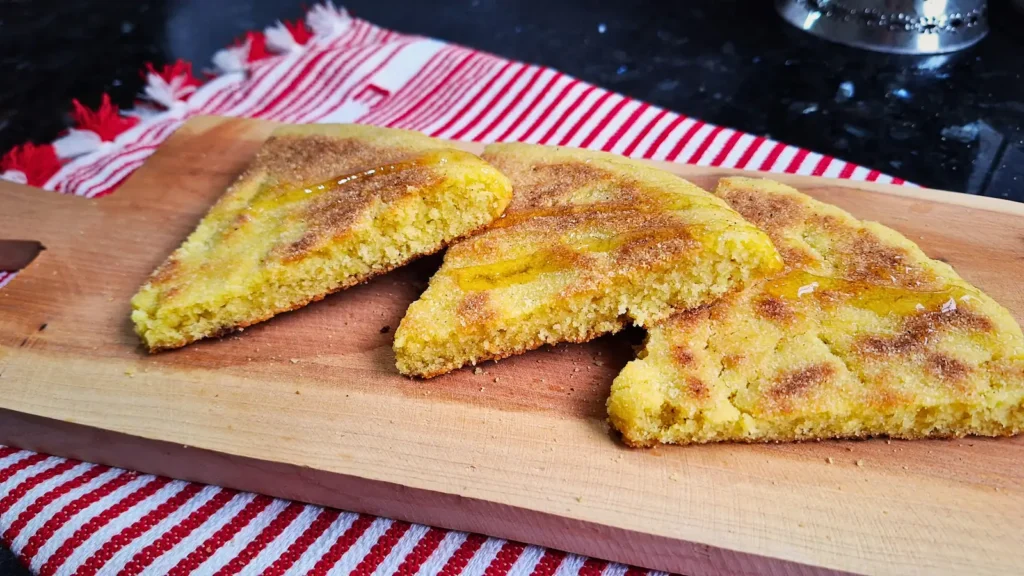
A crispy, buttery stovetop semolina pan bread that comes together in just 15 minutes. Featuring a golden crust and a beautifully soft, crumbly center!

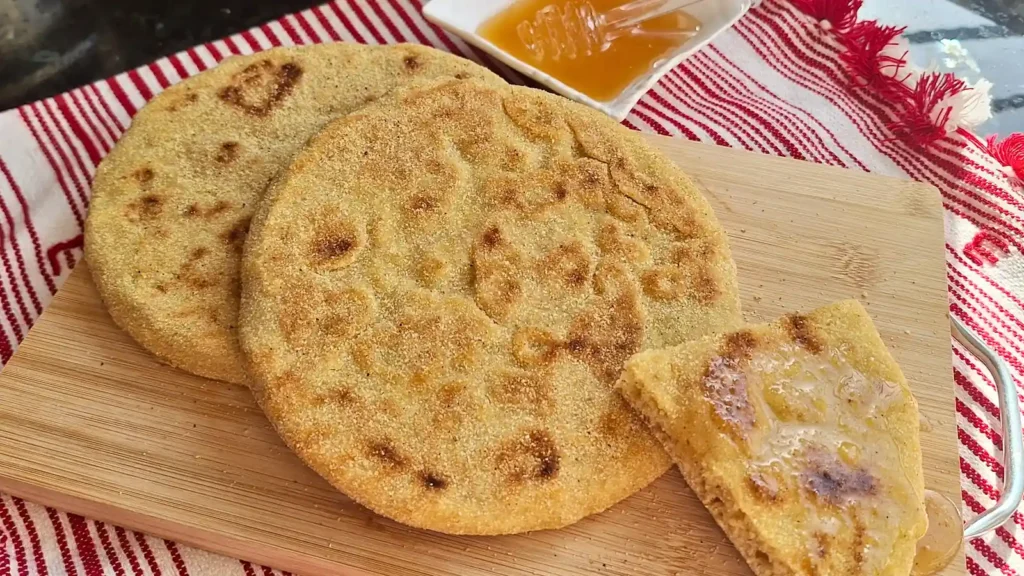
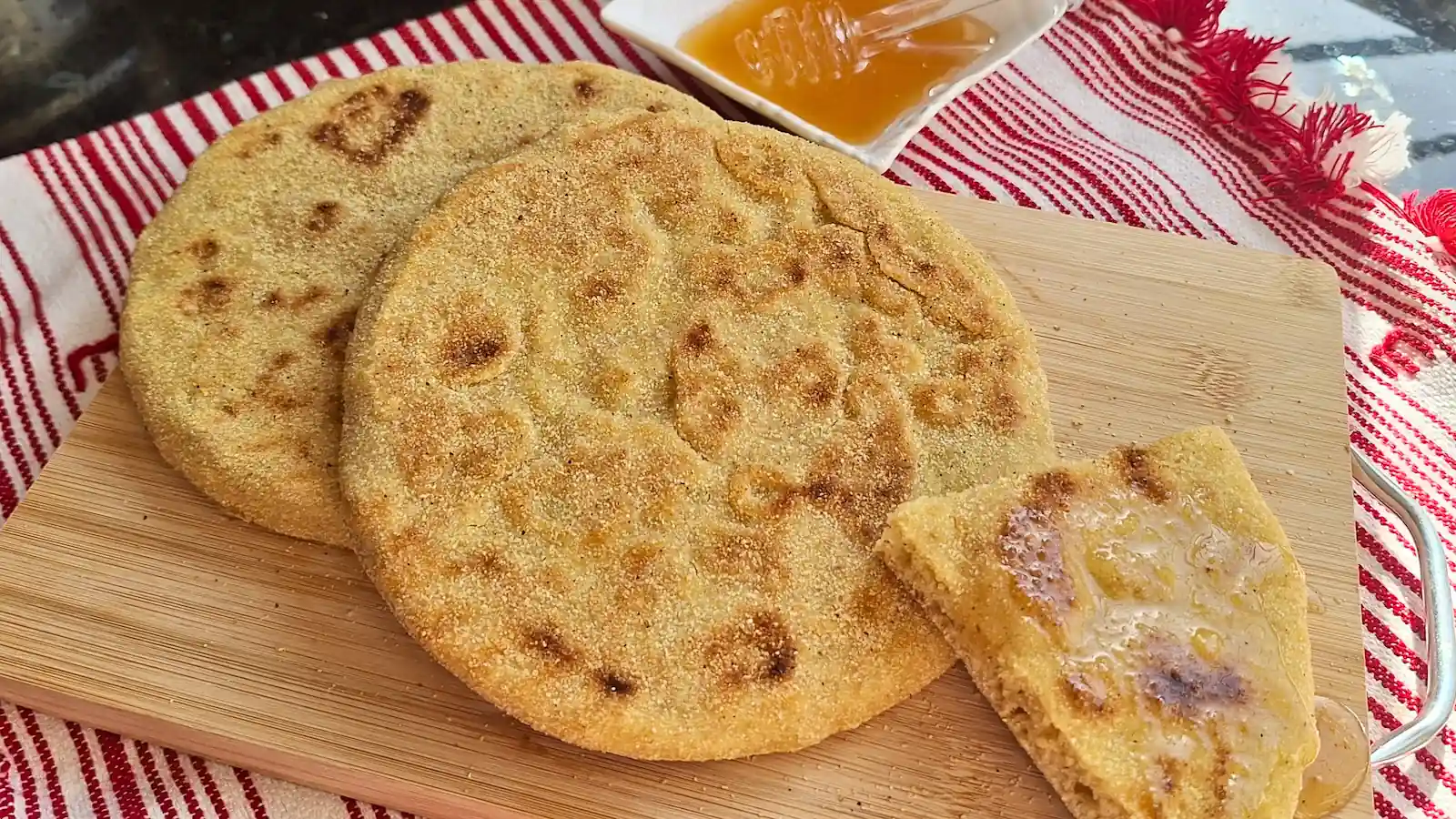
A close-up of authentic Moroccan Batbout, a fluffy stovetop semolina pan bread, served warm on a wooden cutting board with a wedge drizzled in golden honey.
EASY STOVETOP PITA

Authentic Moroccan Batbout

A soft, airy stovetop bread that puffs up like magic in the pan! Perfectly hollow inside for your favorite savory fillings, or delightfully pillowy for dipping in olive oil and honey.

how many stars would you give this recipe? ⭐

Was it “just okay” or “chef’s kiss”? Your opinion matters to us!

Click to rate this recipe!
Rating: 0⭐
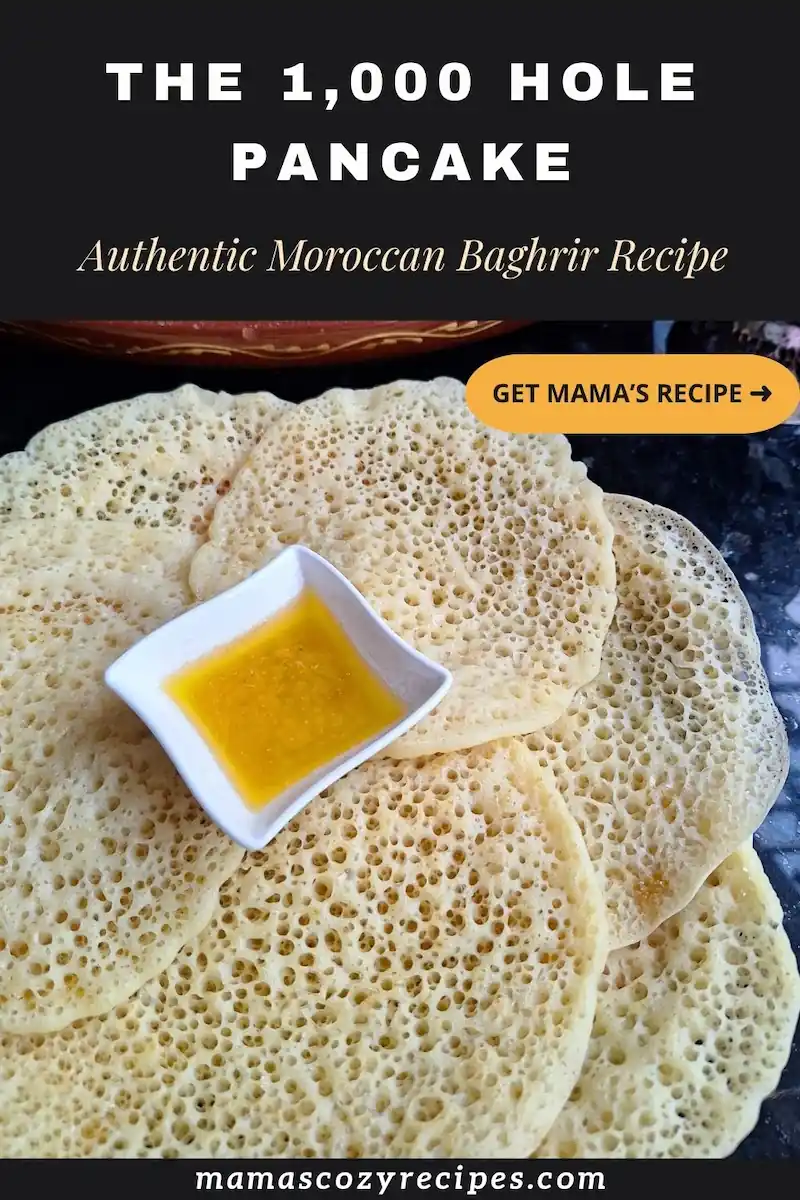
Close-up of perfectly cooked Moroccan baghrir semolina pancakes with no eggs, featuring distinct holes and a central bowl of warm butter and honey.

how many stars would you give this recipe? ⭐

Was it “just okay” or “chef’s kiss”? Your opinion matters to us!

Click to rate this recipe!
Rating: 0⭐

Frequently Asked Questions about Baghrir
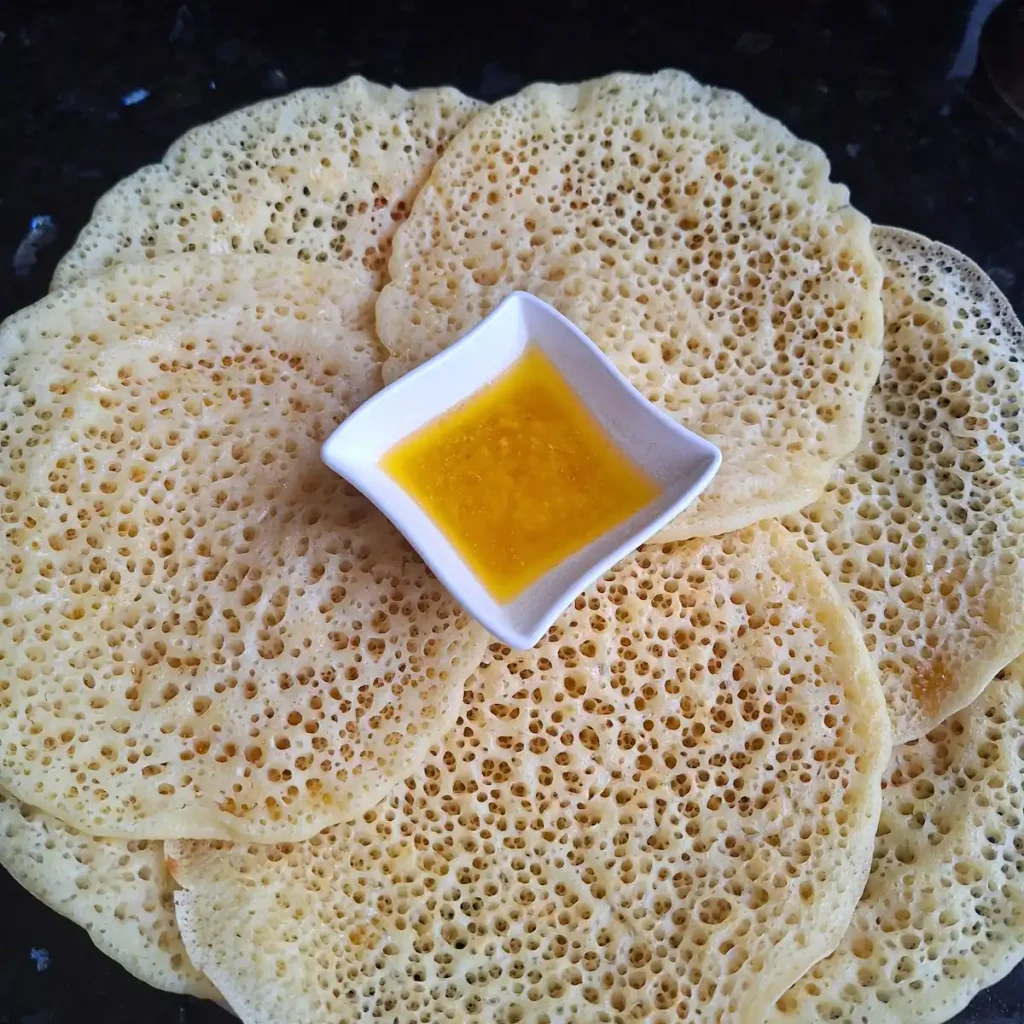
Close-up of perfectly cooked Moroccan baghrir semolina pancakes with no eggs, featuring distinct holes and a central bowl of warm butter and honey.

More Tasty Ideas from Mama’s Cozy Recipes

If this dish made you smile, you’ll love these other delicious picks too.
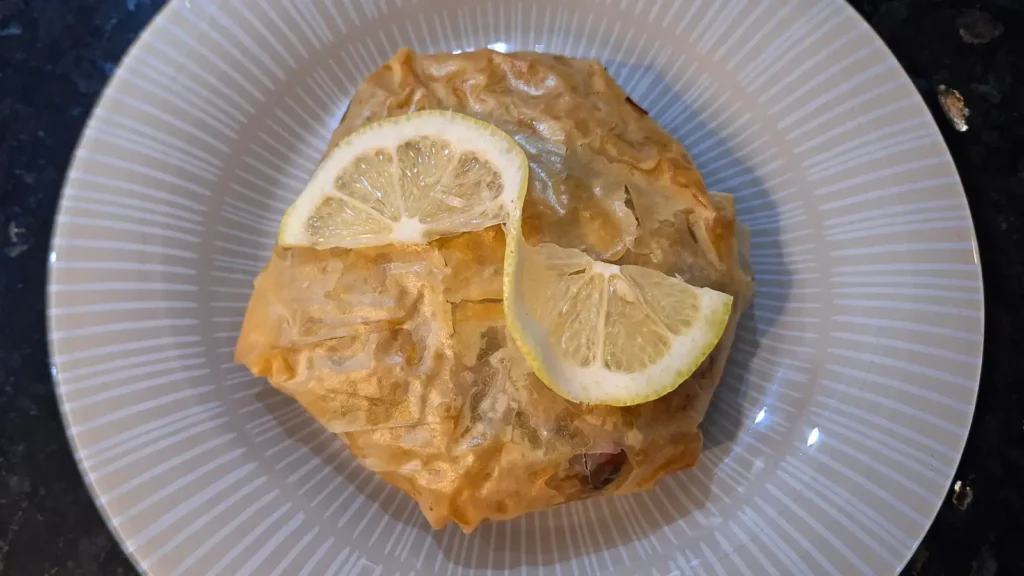
A single baked Moroccan seafood bastilla on a light grey patterned plate, garnished with twisted lemon slices, featuring a perfectly crispy, shattered phyllo dough crust.

Moroccan Seafood Bastilla (Fish Pastilla)
Master Authentic Moroccan Seafood Bastilla! Learn to craft this ultimate savory appetizer, featuring shrimp, calamari, glass noodles, and traditional chermoula, all wrapped inside a perfectly crispy, golden phyllo pastry crust.
Read More
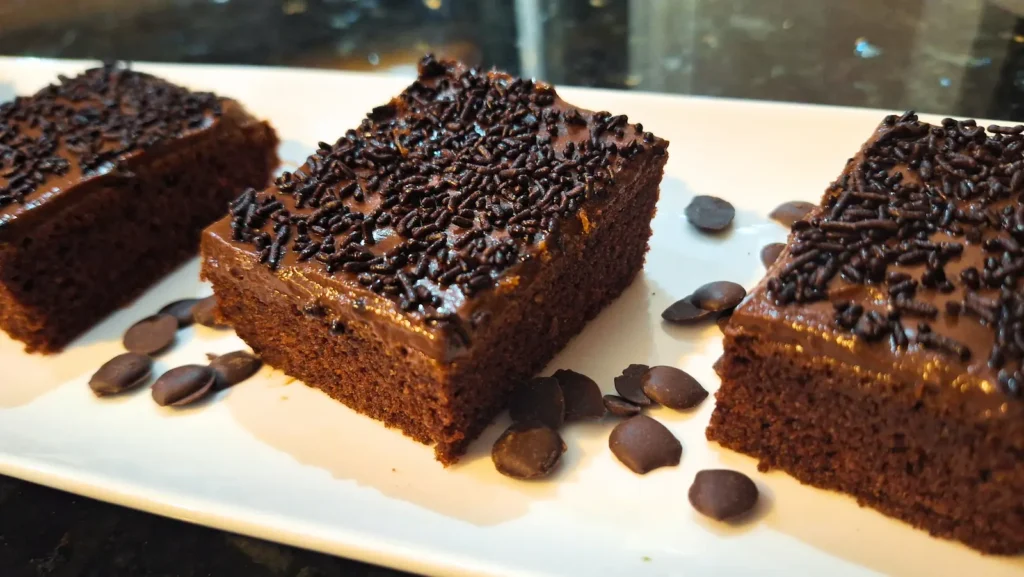
Three slices of authentic Moroccan Chocolate Cake coated in a glossy dark chocolate sauce and sprinkles, served on a white rectangular plate with scattered chocolate chips.

Dark Chocolate Cake Recipe

Authentic Moroccan Teatime CakeMama’s Authentic Moroccan Chocolate Cake (Easy Blender Meskouta) A rich, moist chocolate cake topped with a decadent dark sauce: A true Moroccan teatime classic. ⏱️ 50 Mins…

Read More

Don’t Miss a Recipe!

Are you dreaming of more warm, golden Ramadan recipes for your Iftar table, ones that can be made ahead and still taste like they just came off the stove?

Join the Mama’s Cozy Recipes newsletter, and I’ll send my newest Moroccan treasures straight to your inbox, along with the little secrets I’ve gathered in my kitchen over the years.

Pin For Later

Save Mama’s recipe for later!

Don’t lose this authentic, perfectly spongy Baghrir (Moroccan Thousand Hole Pancakes). Pin it to your favorite Moroccan food board so you can easily find it when you want to serve a foolproof, honey-soaked treat at your next weekend breakfast or Ramadan Iftar!

Save to Pinterest
Save this Batbout recipe to Pinterest

Did you try this recipe? Share your thoughts!

I’d love to hear how your authentic Moroccan thousand hole pancakes turned out! Did you count your holes like a proud Moroccan mama? Leave a comment below to share your tweaks, your kitchen wins, or even your struggles.

And if you loved this baghrir recipe, please leave a star rating above so others can find it too.

The Recipe Card: Moroccan Thousand Hole Pancakes
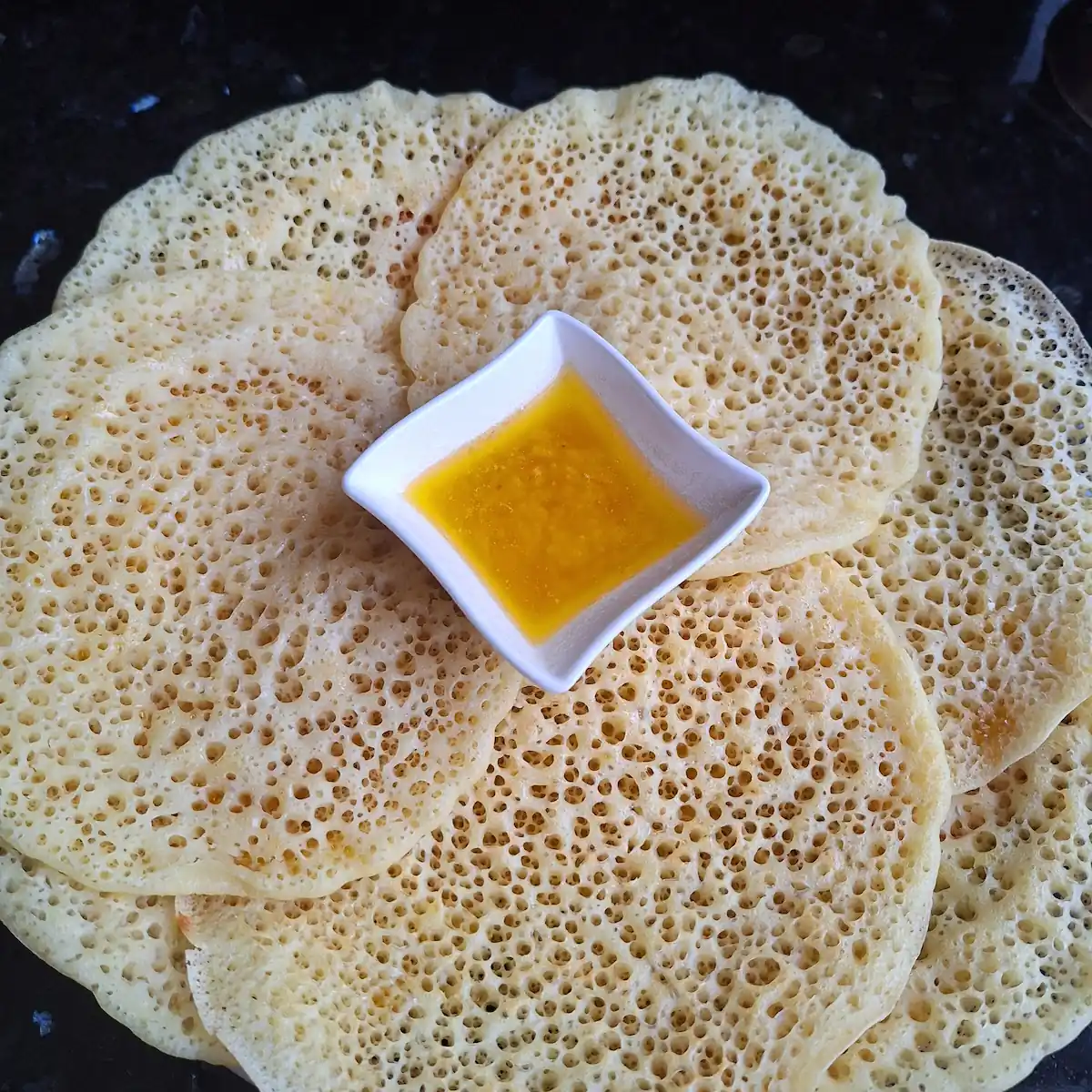
Close-up of perfectly cooked Moroccan baghrir semolina pancakes with no eggs, featuring distinct holes and a central bowl of warm butter and honey.
Mama’s Cozy Recipes

Baghrir Recipe (Moroccan Thousand Hole Pancakes)

Come sit down, because this baghrir recipe (moroccan thousand hole pancakes) from Mama gives you spongy, tender semolina pancakes covered in a thousand tiny bubbles, cooked on one side only. These authentic moroccan thousand hole pancakes are semolina pancakes no eggs needed, finished with a warm melted butter and honey drizzle that soaks into every hole.
Prep Time 5 minutes
Cook Time 20 minutes
Resting Time 30 minutes
Total Time 55 minutes
Servings: 15 baghrir
Course: Appetizer, Breakfast, Ramadan Recipes
Cuisine: Mediterranean, Moroccan, North African
Calories: 142

Ingredients
  

  • 400 g extra-fine durum wheat semolina (~ 2 1/3 cups | 14 oz | Extra-fine is key for a smooth, spongy crumb)
  • 125 g all-purpose flour (plain flour) (~ 1 cup | 4.4 oz | Gives the pancakes a soft, tender structure)
  • 1/2 tsp salt (3 g | Keep it on the opposite side of the bowl from the yeast)
  • 1 full tsp active dry or instant yeast (fast-action yeast) (3-4 g | Use a generous, heaping teaspoon for the best bubbles)
  • 2 tsp baking powder (1 sachet) (7-8 g | Add in the final seconds of blending to keep its full power)
  • 550 ml warm water (~ 2 1/3 cups | 18.6 fl oz | Strictly warm, not hot, or you’ll kill the yeast)
  • 1 Tbsp butter (14 g / 1/2 oz | For serving. Melt it gently with the honey)
  • 2 Tbsp honey (30 ml / 42 g | For serving. Warm it with the butter for the classic drizzle)

Equipment

  • 1 High-speed blender (Mama’s secret for a silky, lump-free batter. A powerful blender gives you that perfect ‘tornado’ in minutes!)
  • 1 High-quality non-stick skillet (frying pan) (A flawless, scratch-free surface is the secret to perfect craters and no sticking! Just make sure your pan is in excellent condition.)
  • 1 Clean kitchen towel (tea towel) (Or a wide tray. Essential for cooling the baghrir in a single layer so they never stack while warm.)

Method
 

  1. Whisking the Base: In a large bowl, combine the semolina, all-purpose flour (plain flour), yeast, and salt, keeping the salt and yeast on opposite sides, then gradually whisk in the warm water to prevent clumps.
  2. The 'Tornado' Blend: For this baghrir recipe blender method, blend the batter on high for 2 to 3 minutes until a deep 'tornado' forms and it's perfectly smooth, adding the baking powder in the last few seconds. *(Check Mama's Tips and Notes above for the exact batter consistency!)
  3. The Resting Phase: Pour the batter back into the bowl, cover tightly with plastic wrap (cling film) and a warm kitchen towel (tea towel), and rest 20 to 30 minutes until domed and bubbly. *(Watch the video below to see what the active bubbles should look like!)
  4. The Pour and Swirl: Preheat your non-stick skillet (frying pan) over medium heat for 2 minutes, then take it off the heat, pour in a half-ladle of batter, and give one circular swirl before returning it to the heat. *(Watch the video below to see the full cooking process!)
  5. Cooking the Thousand Holes: Cook on one side only (do not flip) over medium heat for about 2 minutes, until the surface turns matte, the wet yellow color fades, and the craters fully form. *(No holes? Head up to our baghrir troubleshooting section "Mama's Tips & Notes" for quick fixes!)
  6. Cooling and Serving: Lay the baghrir in a single layer on a wide tray or clean towel and never stack them while warm. When ready to serve, reheat slightly, stack (we explain why it's okay to do so in this phase in the post), and pour over the warm melted butter and honey. *(See the cooling photo in the post above for exactly how to lay them out and serve them!)

Video

Notes

  • Baghrir Troubleshooting: The batter should be smooth and resemble liquid yogurt, and your pan must be non-stick, in excellent condition, and set over medium heat, or the holes won’t form. Scroll up to Mama’s troubleshooting section for more fixes!
  • Use strictly lukewarm water. Hot water kills the yeast and ruins the texture of the Baghrir.
  • Never stack fresh baghrir straight off the pan, or they turn into a watery, gelatinous mass. Cool them in a single layer first, Once cooled, you can safely stack them. As explained in the post, a quick last-minute reheat is the best way to serve them warm and soft!
  • These semolina pancakes no eggs are naturally egg-free and dairy-free (vegan) before the butter and honey topping, so serve with Amlou for a fully vegan option. For exact fridge, freezer, and reheating steps for these authentic moroccan thousand hole pancakes, scroll up to our FAQ section!

Leave a Comment

Your email address will not be published. Required fields are marked *

Recipe Rating


Scroll to Top